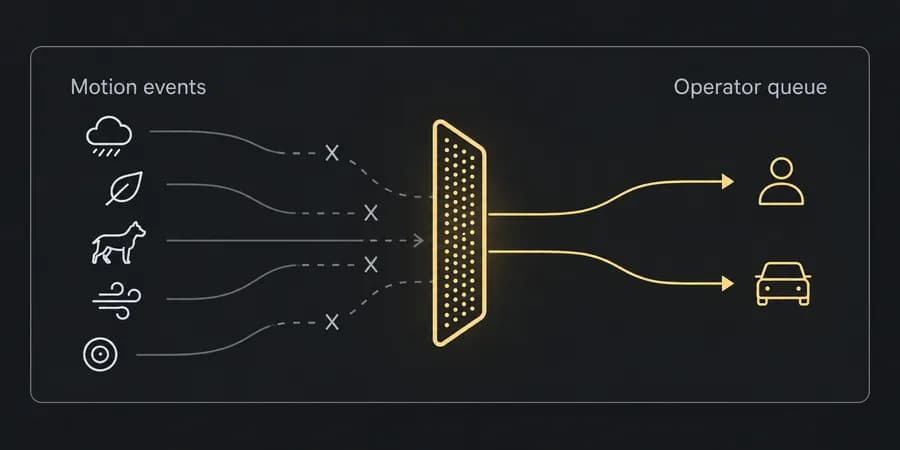
Most CCTV software pushes every motion-triggered event into the operator queue, so a shift is spent reviewing vegetation, weather, animals and lens problems. NOVA99x judges each event before it becomes a task, and only people and vehicles come through.
Where it sits
Between the camera and the operator queue — nothing downstream changes.
How it decides
Object detection, dynamic motion detection, tracking, event classification and ReID movement analysis, layered.
What it needs
640×480 minimum, 300–1,000 lux, a person filling 300 px² of frame (600 px² on IR).
What you get back
A cleaner queue ordered by priority, plus an hours-saved figure on the dashboard.
Four problems, ten answers
They group into four arguments.
Alarm noise
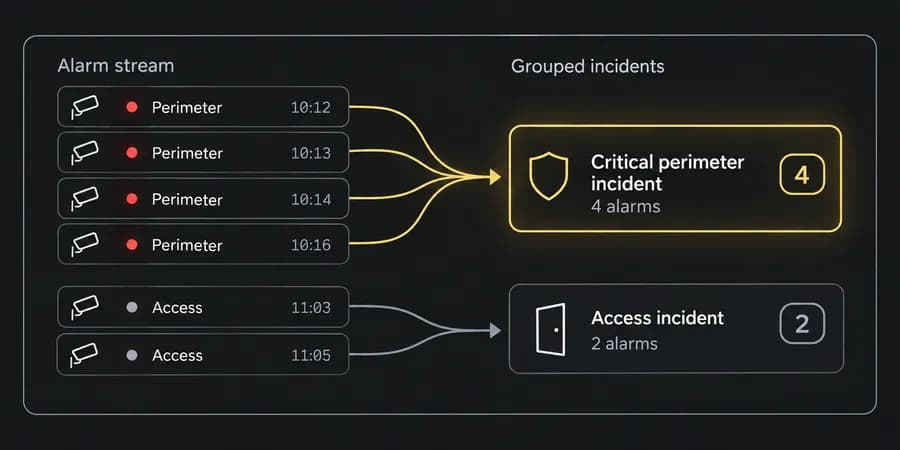
Alarm volume is not the real problem. Operator time is. Filter first, then prioritise what survives.
NOVA99x · ZenMode
Evidence you can defend
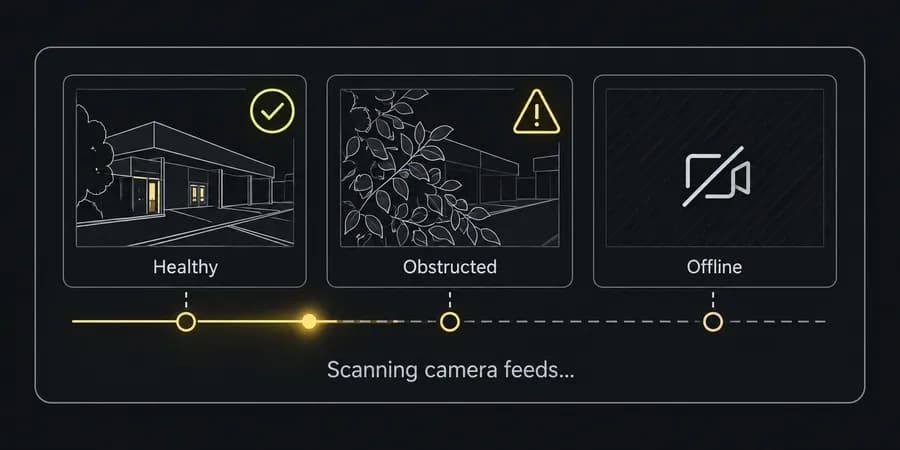
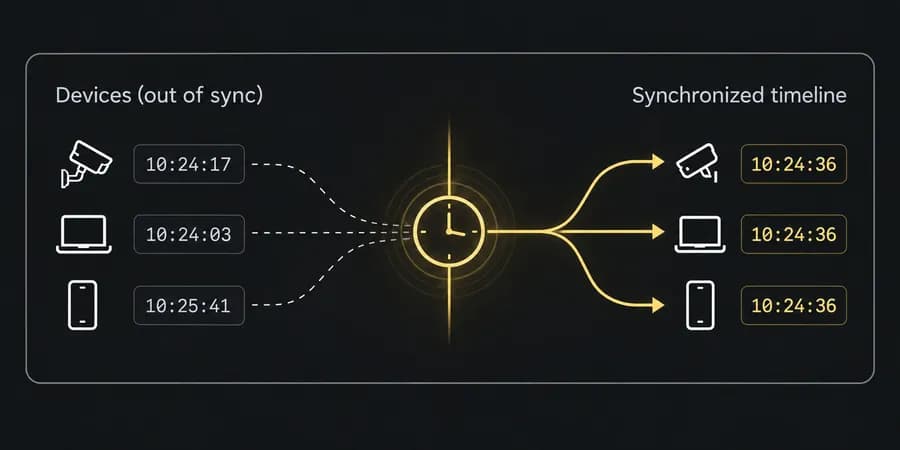
A camera nobody checked and a clock nobody synced fail in the same place: the investigation.
HealthCheck · TimeSync
Scale without headcount
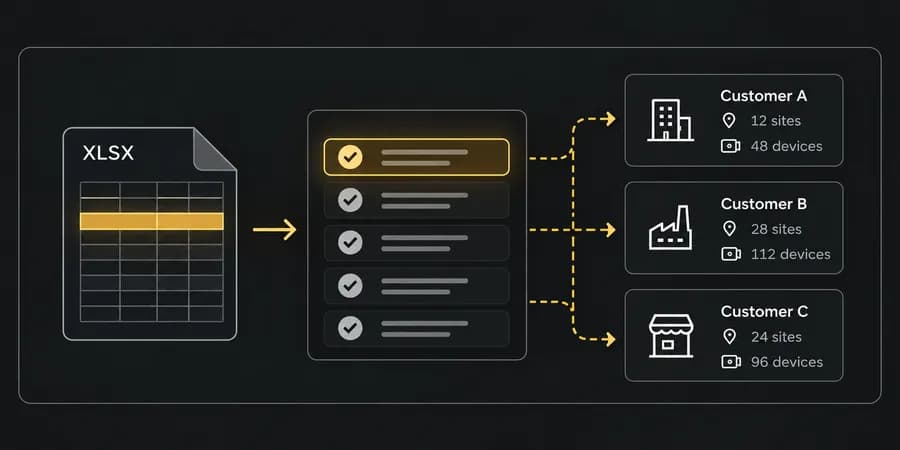
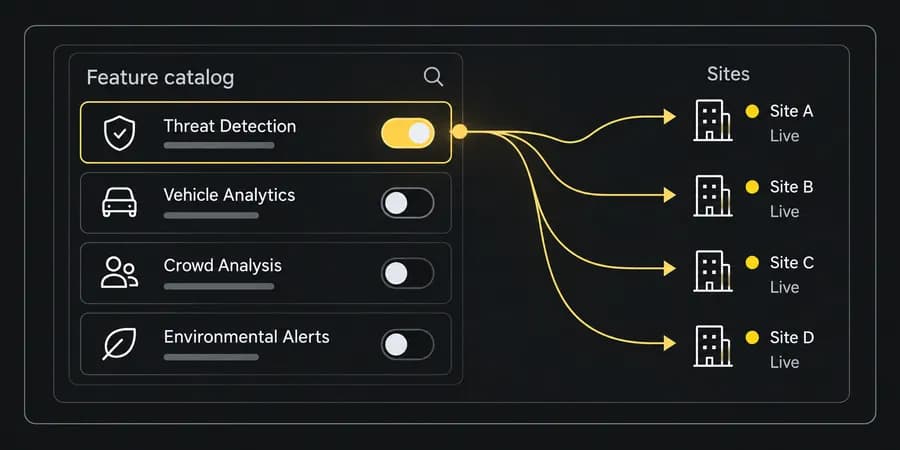
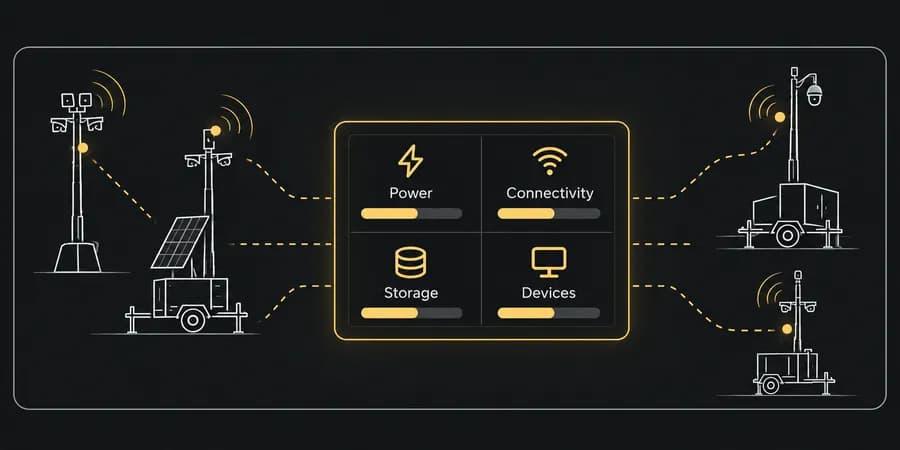
Onboarding, tower fleets and feature rollout are the three places growth actually stalls.
BulkImport · MarketPlace · TowerGuard
The working day
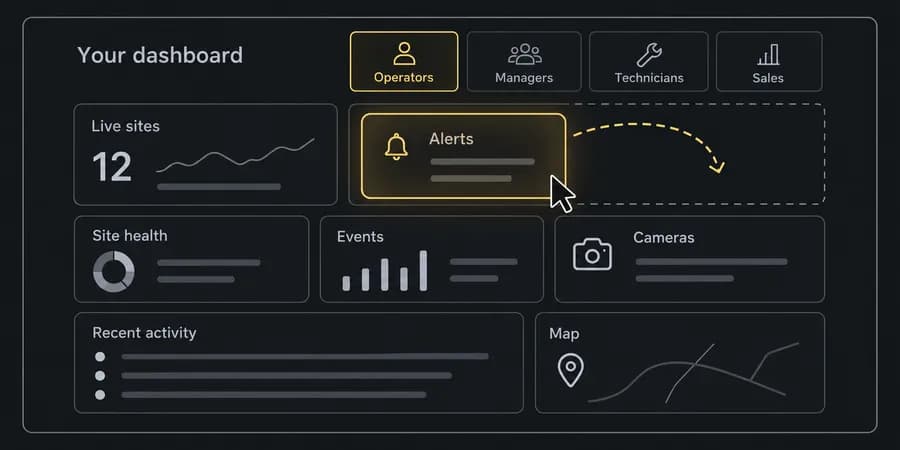
What a person sees when they log in, what they can ask for, and what they can hand to a client.
CustomView · Genie · PulseView
CPO & APT calculator
What alarm noise costs you.
High alarm processing time is the ceiling on every monitoring centre. Set your own figures to see the workload GCXONE removes, and the cameras per operator that releases.
Everything reaching the queue today, false alarms included.
Seconds to glance, verify, dismiss or escalate.
What your current setup already removes.
Current CPO
550
cameras per operator today
APT with GCXONE
18.3
hours a day, from 611.1 now
Capacity released
97.0%
of the alarm workload, per operator
CPO with GCXONE
6,667
cameras per operator supported
What this assumes
Alarm processing time is alarms × handling time. Today that is 611.1 hours a day.
NOVA99x removes 85% of what your current filtering leaves, and ZenMode handles the remainder at 5 seconds an alarm. Both are the published best case, and neither is adjustable here.
Supported CPO assumes 500 cameras per fully-attentive operator at 40% monitoring utilisation. It follows the workload ratio, so it does not change when your own camera or operator count does.
No money is estimated: that depends on your labour rates rather than on ours.
Cameras per Operator (CPO) — how many cameras one operator carries. Alarm Processing Time (APT) — hours a day spent working the alarm queue.
Activation, not installation
All ten are already in your GCXONE.
Each one is a MarketPlace listing: read what it does, activate it, and policies and permissions apply on their own. Live in minutes rather than a change request — which is the point of shipping them this way.
Release notes
Know when something ships
New features, fixes and integration updates for GC Surge, delivered to your inbox as they are released.